
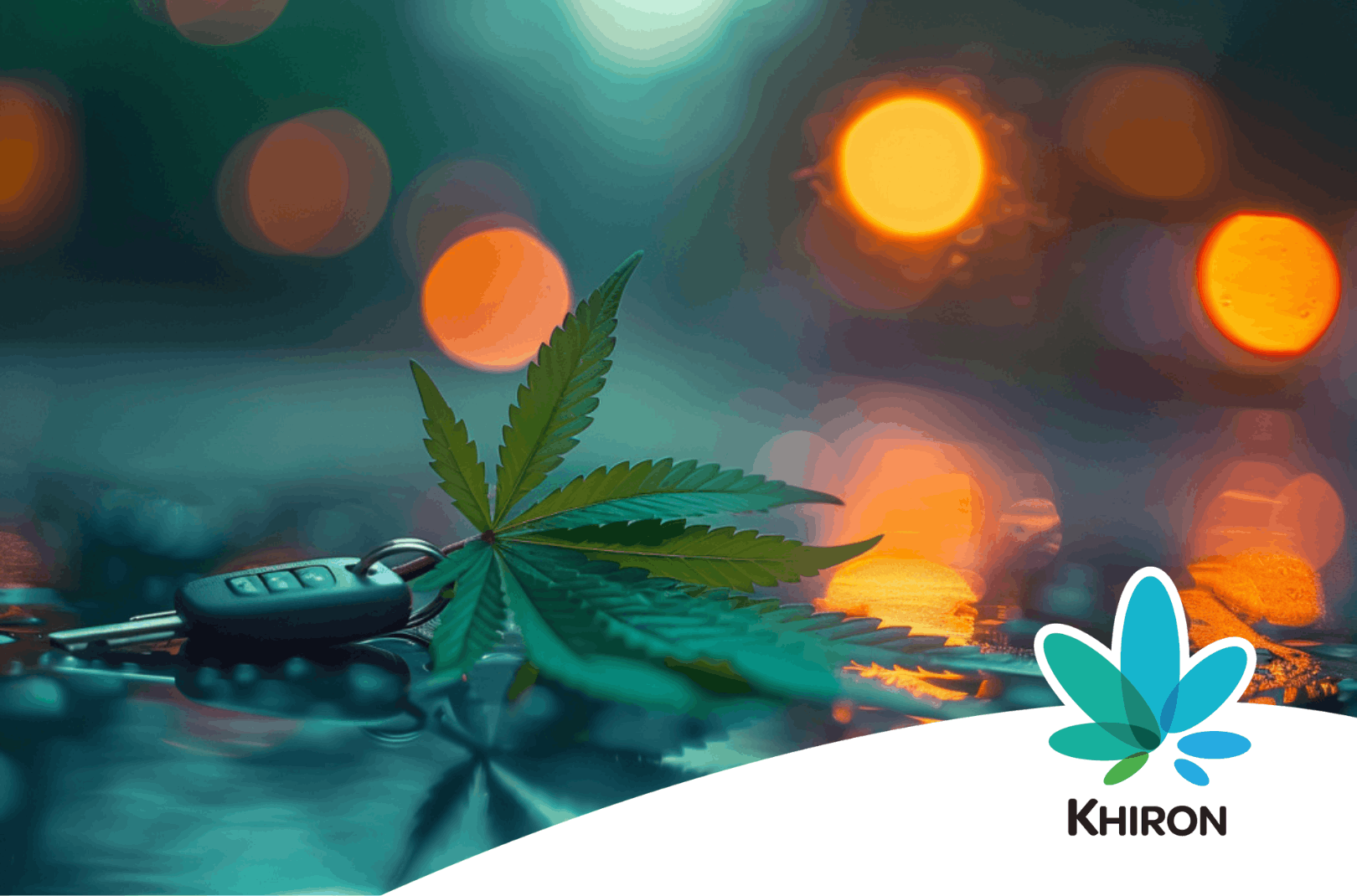
Since the partial legalization of cannabis, the legal situation in Germany has changed. However, the following still applies to driving under the influence of cannabis: Anyone who uses cannabis and then drives a car poses a danger to others, risks fines, points in Flensburg, and—in addition to the safety concerns—the loss of their driver’s license.
As of August 22, 2024, a statutory THC limit of 3.5 ng/ml THC in blood serum has been in effect for the first time. Previously, a level of approximately 1.0 ng/ml THC in the blood was already considered an administrative offense—a threshold that had long been criticized as too strict1. According to the Federal Ministry of Digital and Transportation, the new regulation is intended to distinguish more clearly between actual impairment and mere detectability. The new regulation provides greater clarity but does not alter the underlying principle.
The most important facts in brief
- THC threshold: 3.5 ng/ml THC in blood serum
- New drivers and people under 21: the zero-tolerance rule remains in effect
- First offense: €500 fine, 2 points, and a 1-month driving suspension
- THC can still be detected many hours after use
- When it comes to medical cannabis, it's not just the THC level that matters, but above all, one's actual ability to drive
Cannabis and Driving: What Are the Basic Rules?
Even after partial legalization, cannabis remains strictly regulated in road traffic. Anyone who drives a vehicle while under the influence of THC may still be committing an administrative offense or even a criminal offense.
The current THC limit
The legal limit is 3.5 nanograms of THC per milliliter of blood serum. This limit was established based, among other things, on recommendations from the Limit Values Commission and assessments by the TÜV Association regarding traffic safety while under the influence of cannabis.
It is important to note that the threshold does not automatically mean that driving at exactly that level would be safe. Rather, it marks the range above which the law assumes a potential impairment may exist.
Stricter rules apply to certain groups:
- New Drivers During Their Probationary Period
- People under the age of 21
- People who also consumed alcohol
In this case, a zero-tolerance policy—or a significantly stricter standard—continues to apply, although this cannot be generalized.
Why was the threshold adjusted?
The previous threshold of approximately 1.0 ng/ml of THC has been criticized for years because it made little distinction between active impairment and mere residual levels. The new threshold is intended to distinguish more clearly between occasional use and actual impairment. At the same time, one thing remains clear: Anyone who drives while under the recognizable influence of cannabis must still expect consequences.
What effects can cannabis have on a person's ability to drive?
Cannabis can affect various abilities that are important for safe driving. This is noted, among others, by the Federal Institute for Public Health (formerly BZgA). These include, in particular:
- Reaction rate
- Concentration
- Attention
- Perception of Speed and Distance
- Coordination
These effects can vary in intensity depending on the individual, the amount consumed, the THC content, and the method of consumption2. The risk of impaired driving ability may be particularly high shortly after consumption. Therefore, cannabis use and driving should always be strictly separated.
How long should you wait before driving after consuming alcohol?
There is no one-size-fits-all answer. How long THC remains detectable and how long the effects last depend, among other things, on:
- Amount consumed
- THC content
- Frequency of consumption
- Metabolism
- Body Fat Percentage
For this very reason, it is not possible to make blanket statements about when it is safe to drive again after using cannabis. The ADAC recommends not driving for at least 24 hours after using cannabis. Pharmaceutical trade publications such as the *Pharmazeutische Zeitung* also point out that driving ability may still be impaired even as THC levels decline.
THC in the Blood: What Do the Levels Mean?
When it comes to driving, the active THC level in the blood is the determining factor. A distinction is made between THC and THC-COOH.
- THC is the psychoactive compound
- THC-COOH is a metabolite and merely indicates past use
For legal purposes, the active THC level is what counts.
Why Blood Test Results Are Hard to Predict
There is a high level of online search interest in tables or conversion tools to help people better estimate their own THC levels. However, the accuracy of the search results is questionable. While the math may be straightforward in theory, in practice, blood levels vary greatly from person to person. Immediately after consumption, levels can rise significantly and then drop relatively quickly. At the same time, measurable concentrations may still be present the following day.
For this reason, it is not possible to make a blanket determination regarding either the exact detectability or an individual’s fitness to drive.
Traffic Stops and Cannabis: What Happens?
If there is suspicion that a person has been driving under the influence of cannabis, the traffic stop usually follows a similar procedure.
How the Police Check a Driver's Fitness to Drive
At first, police officers often look for outward signs such as:
- Slowed Reactions
- Unsafe Behavior
- Difficulty concentrating
- Red Eyes
This may be followed by coordination or reaction tests. In addition, a saliva test is often offered. This is voluntary. If suspicion persists, a blood draw may be ordered. The THC level in blood serum is used for legal assessment. Information on the pharmacological classification of THC and THC-COOH can be found, among other places, at the Federal Institute for Drugs and Medical Devices (BfArM).
What rights do you have during a traffic stop?
Those involved are not required to incriminate themselves. As a general rule:
- You are not required to provide information about your consumption
- Saliva tests and coordination exercises are voluntary
- A blood draw may be ordered
- The right to remain silent remains in effect
Regardless, it is advisable to remain calm and composed during the inspection.
Penalties for Driving Under the Influence of Cannabis
Anyone who drives with a THC level above the legal limit faces penalties.
Consequences for a First Offense
For a first offense, the following penalties generally apply under Section 24a of the Road Traffic Act3:
- 500 € fine
- 2 points in Flensburg
- 1-month driving ban
As mentioned earlier, the regulations for new drivers and people under the age of 21 are stricter. In these cases, even the detection of the smallest amounts of THC can result in consequences.
Loss of a Driver's License and MPU
Depending on the situation and the violation of applicable case law, a medical-psychological examination (MPU) may be ordered in addition to the suspension of the driver’s license.
This often takes effect when:
- Repeated Violations
- Mixed consumption
- Unusual driving behavior
- Doubts About Fitness to Drive
Medical Cannabis and Driving
Special regulations apply to patients who have been prescribed cannabis by a doctor. However, a prescription does not automatically mean that a person is allowed to drive at any time. The same rule applies to medical cannabis: Anyone who feels impaired or notices side effects must not operate a vehicle.
What distinguishes medical cannabis from recreational use?
For medical use, it is usually taken:
- At a constant dosage
- At specified times
- Under medical supervision
This often results in a steady level of the active ingredient in the blood. Many patients also develop a certain degree of tolerance to the effect. However, this does not automatically mean that there are no longer any limitations.
When are patients allowed to drive?
Patients are generally allowed to drive if:
- The therapy is medically supervised
- There is no impairment of driving ability
- There are no acute side effects
Especially at the start of treatment or after a dose adjustment, the patient’s ability to drive may be temporarily impaired. This is generally assessed by the treating physician and is also the patient’s own responsibility.
What documents should patients bring with them?
We recommend the following:
- Copy of the Recipe
- Medical Certificate and Dosage Instructions
- Patient ID Card
These documents can help explain the medical use of the substance during a traffic stop.
The so-called "medication privilege"
Medical cannabis is subject to what is known as the “medication privilege.” This means:
A detectable THC level alone does not automatically result in a penalty for patients. The decisive factor is whether there is a specific impairment of the ability to drive.
Nevertheless, a prescription does not automatically mean that a person’s fitness to drive is generally recognized. Driver licensing authorities may, on a case-by-case basis, have the matter reviewed to determine whether the requirements for safe participation in traffic are in fact met.
If the case goes to court, judges now take a much more critical view of cannabis prescriptions than they did a few years ago.
Simply presenting an (online) prescription is often no longer sufficient in these proceedings to automatically qualify for the so-called medication privilege under § 24a(4) of the Road Traffic Act (StVG).
In the absence of verifiable medical treatment under a doctor's supervision, the situation may be assessed legally in a similar manner to recreational use—including a fine, points on the license, and a driving ban.
Medical Cannabis and the MPU
In connection with medical cannabis, questions are increasingly arising regarding the MPU and fitness to drive. One reason for this is the sharp increase in cannabis prescriptions issued through telemedicine services. This often gives the impression that a prescription alone is sufficient to allow a person to drive without any problems, even with higher THC levels. It is precisely this assumption that is now regularly causing problems in driver’s license proceedings.
In this context, the Aschaffenburg Local Court made it clear that, from the courts’ perspective, standardized online questionnaires—without a personal medical assessment, review of medical records, or individual treatment contact—are not sufficient to adequately substantiate therapeutic use.
Why Cannabis Patients Can Still Be Screened
Even in cases where cannabis is prescribed by a doctor, driver’s license authorities may order a fitness-to-drive assessment. The reason for this is that THC remains a psychoactive substance. There is also concern that cannabis prescriptions could otherwise be used to circumvent traffic laws. The authorities therefore examine, among other things, whether:
- The intake is medically justifiable
- The therapy is medically supervised
- Medication is taken as prescribed
- There are limitations on performance
- The underlying medical condition itself may affect a person's ability to drive
In this context, it is not only the THC level that is taken into account in the regulatory assessment, but the overall picture of the treatment. In this case , the review is conducted in accordance with Sections 9.4 and 9.6 of Appendix 4 to the FeV4.
What Is Assessed During an MPU Involving Medical Cannabis
The assessment is not about abstinence, as is often required for recreational use. Rather, the focus is on whether the treatment is being carried out responsibly and whether the individual is capable of participating safely in traffic.
Among other things, the review will examine whether:
- The medication is taken as prescribed by the doctor
- The dosage has been stabilized
- Side effects may occur
- Performance is maintained over the long term
- The patient can determine when it is not safe to drive
It is precisely this last point that is often evaluated in detail in expert reports.
Note: When it comes to recreational use, the focus is usually on the so-called ability to separate use from driving.
CBD and Driving
CBD products are generally not considered to be intoxicating. Nevertheless, it’s wise to exercise caution. The reason: Some CBD products may contain small amounts of THC. This could theoretically result in measurable THC levels.
Anyone who uses CBD products regularly should therefore pay attention to:
- Reputable Manufacturers
- Laboratory analyses
- Low-THC products
Conclusion
The new THC limits provide greater clarity regarding cannabis use while driving, but they do not alter the fundamental responsibility of drivers on the road. Anyone who uses cannabis should ensure that their driving ability is not impaired before operating a vehicle. Special regulations apply to patients who use medical cannabis. However, the top priority here as well is that individuals may only drive when their driving ability is fully intact.
FAQ on Driving Under the Influence of Cannabis
The legal limit is 3.5 ng/ml of THC in blood serum.
Yes. A zero-tolerance policy continues to apply to new drivers and people under the age of 21.
There is no one-size-fits-all answer to this. Many expert organizations recommend waiting at least 24 hours between consumption and driving.
In principle, yes—provided there are no limitations on one's ability to drive.
These may include coordination exercises, saliva tests, and, if necessary, a blood draw.
Yes, if products contain traces of THC.
- Federal Ministry of Digital and Transportation (BMDV): Legislative Amendment Regarding the THC Threshold in Road Traffic ↩︎
- Federal Center for Health Education (BZgA) / Federal Institute for Public Health (BIÖG) ↩︎
- Road Traffic Act (StVG), Section 24a ↩︎
- Regulation on the Authorization of Persons to Drive on Public Roads (Driver’s License Regulation—FeV)
Appendix 4 (regarding Sections 11, 13, and 14), Fitness and Conditional Fitness to Operate Motor Vehicles ↩︎