

Medical cannabis for endometriosis is increasingly becoming the focus of medical attention. Endometriosis is a chronic disease that affects an estimated one in ten women in Germany. Typical symptoms include severe menstrual pain, chronic lower abdominal pain, fatigue and restrictions in everyday life. As many women continue to suffer despite conventional treatment, there is growing interest in medicinal cannabis as a possible treatment option. The cannabinoids THC and CBD in particular can help to relieve pain, influence inflammation and improve quality of life.
Endocannabinoid system and endometriosis
The human body has a complex endocannabinoid system (ECS) that is involved in the regulation of pain, mood, sleep and immune processes. Studies, some of which are still ongoing, show that there may be changes in the ECS in women with endometriosis. Cannabinoid receptors are not only found in the brain, but also in uterine tissue and in endometriosis lesions.
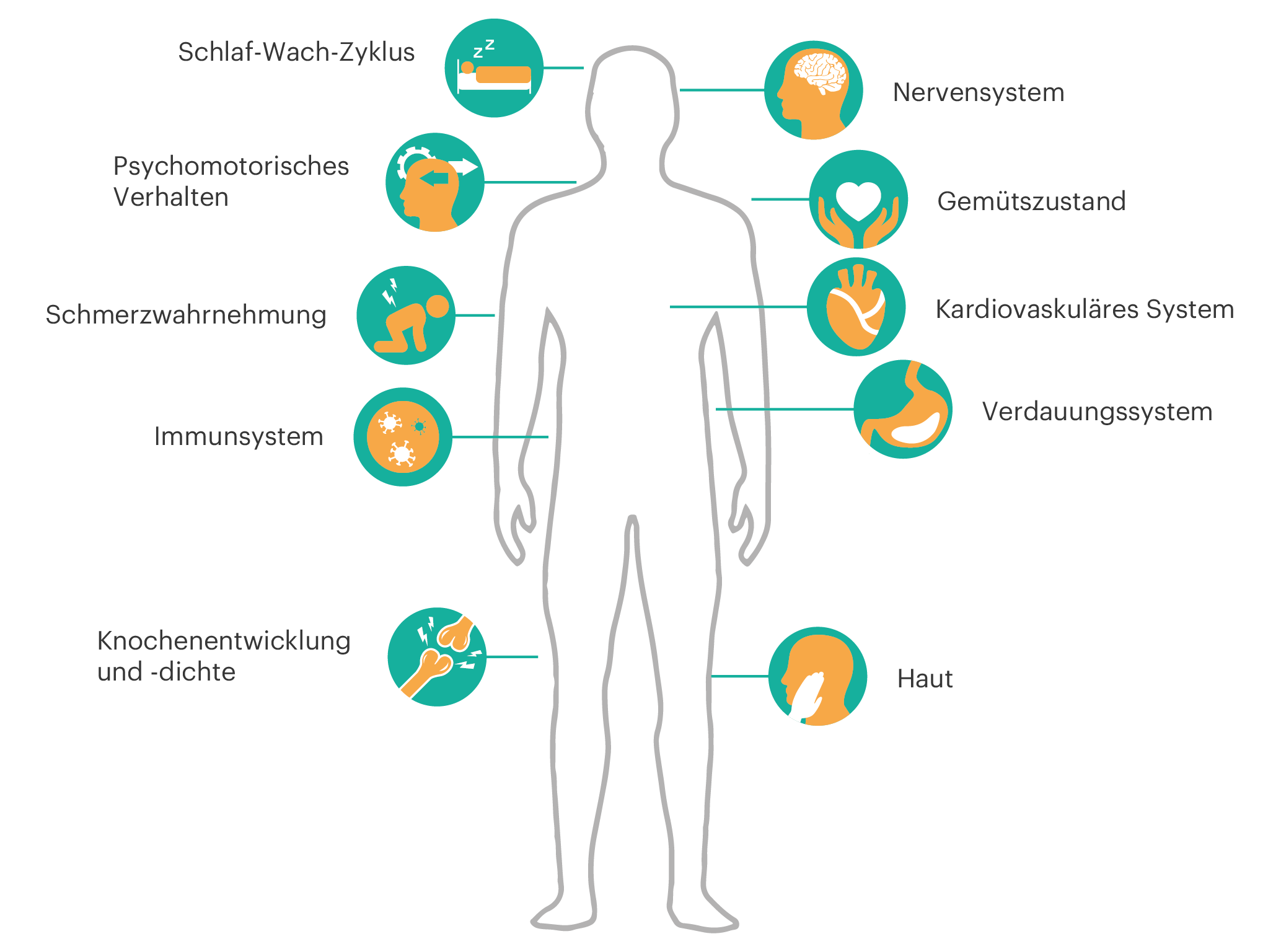
These findings suggest that cannabinoids can modulate pain and inhibit inflammation via the ECS. THC binds strongly to CB1 receptors and influences the perception of pain, while CBD has a variety of effects - including anti-inflammatory, anxiolytic and stabilizing for the nervous system.
Study situation and evidence
The evidence to date on cannabis in endometriosis is still limited, but initial interim results are promising.
Clinical pilot study at Charité Berlin
An ongoing study (as of October 2025) involving 27 female patients is investigating the use of a standardized and balanced full-spectrum cannabis extract in a combination of 12 mg THC and 14 mg CBD per ml over a period of three months. The women continued to suffer from chronic pain despite previous treatment.1
Interim results at a glance
- Pain decreased significantly (both pain intensity and pain days per month).
- The need for painkillers fell noticeably.
- Symptoms such as fatigue, anxiety and central sensitization improved significantly.
- Quality of life increased in all areas measured, including pain perception, emotional well-being, social support and sexuality.
- Side effects were rare and mild, and many patients reported good tolerability.
Observation data and surveys
In addition to clinical data, surveys also provide valuable insights. Many affected women report that they already use cannabis to alleviate symptoms. Common effects are:
- Less pain during and outside menstruation.
- Improved sleep.
- Less nausea.
- Less intake of conventional painkillers.
- Increased well-being in everyday life.
These experiences underline that cannabis can be a valuable support for women with endometriosis.
Mechanisms of action of THC and CBD
The positive effects of cannabis are based on various mechanisms:
- Inhibition of pain via CB1 receptors in the nervous system.
- Inhibition of inflammation by CB2 receptors in immune cells.
- Muscle relaxation that can relieve spasmodic pain.
- Mood stabilization and reduction of feelings of anxiety.
- Regulation of sleep, which supports recovery and healing processes.
This multimodal effect distinguishes medicinal cannabis from many classic painkillers, which often only address one symptom.
Practical application in Germany
With the new S2k guideline on endometriosis, cannabis is recognized in Germany as a possible treatment for chronic courses. Women aged 25 and over who continue to suffer from pain despite conventional treatment can receive an individualized treatment trial with medicinal cannabis.
Treatment is usually carried out with oral extracts, each of which contains a fixed, balanced level of THC and CBD. This allows the dose to be reliably adjusted. In Germany, specially trained doctors prescribe these preparations, which are reimbursable in many cases after approval by the health insurance companies. Nevertheless, those affected report that the application process can sometimes be time-consuming.
Opportunities and risks of cannabis for endometriosis
| Opportunities | Risks |
| Relief of chronic pain caused by endometriosis. | Possible side effects such as tiredness, dizziness, dry mouth. |
| Improving quality of life by reducing symptoms. | Mental effects of high THC doses. |
| Reduction of conventional painkillers. | Risk of developing tolerance or dependence. |
| Positive effect on sleep, anxiety and mood. | Limited data on long-term effects. |
| Anti-inflammatory and antispasmodic properties due to cannabinoids. | Complex application procedures and uncertain cost coverage in Germany. |
Note: Self-pay patients have an additional option that involves less effort. This article describes the two ways in which a cannabis prescription can be obtained.
Open questions and research perspectives
Even if the current results are positive, long-term studies and direct comparisons with other therapies are still lacking. For example, it is unclear which subgroups of women benefit in particular or how cannabis works in the long term when combined with hormone therapy or surgery.
There is also a need for research into the optimal ratio of THC and CBD and the use of other cannabinoids. Another important question is how medical cannabis can be integrated into healthcare practice in Germany so that women have easier access to treatment.
Conclusion
Medical cannabis is a promising addition to the treatment of chronic pain for many women with endometriosis. An ongoing study, such as the pilot study at Charité Berlin, is showing significant improvements in pain, fatigue, anxiety and quality of life - without serious side effects. Practical experience confirms these results.
With the new guideline in Germany, medical cannabis is legally protected and can be used as an individual therapy trial. This opens up a new opportunity for affected women to alleviate their symptoms and regain some of their quality of life.
FAQ on cannabis for endometriosis
Cannabis has a complex effect on the body via the endocannabinoid system. In endometriosis, cannabinoids such as THC and CBD can relieve chronic pain, inhibit inflammation and improve general well-being. Many patients also report that medicinal cannabis significantly reduces their symptoms and thus improves their quality of life.
Medical cannabis is often used as a complementary therapy for endometriosis when conventional measures are not sufficient and chronic pain persists. The Charité study to date shows that treatment with cannabinoids is well tolerated in most cases. Although side effects are possible, the effect via the body's own endocannabinoid system makes cannabis a promising medical option for endometriosis.
In medical therapy, the cannabinoids THC and CBD are particularly important in a good balance. These substances are used in standardized extracts and develop their effect directly in the body. THC has a stronger pain-relieving effect, while CBD is anti-inflammatory and anxiolytic. A combination of both cannabinoids is often used to effectively treat chronic symptoms of endometriosis.
In contrast to traditional painkillers, cannabinoids work via the body's endocannabinoid system. This special mode of action makes it possible to influence not only pain, but also other symptoms such as fatigue or mood swings. Medical cannabis is therefore often used as a complementary therapy for endometriosis, especially if chronic symptoms persist despite other measures.
- Charité poster (Kratz et al., 2024) - internal source, link as soon as published ︎