

The cultivation of medicinal cannabis has developed into a highly precise science in recent years. In professional production facilities, hemp is not simply planted, but cultivated under strictly controlled conditions. So-called indoor cannabis cultivation (indoor grow) produces stable yields, standardized quality and flowers that are particularly suitable for medical use.
The most important facts in brief
- Full control over climate, humidity and LED lighting.
- Growth independent of seasons and external influences.
- Consistently high quality thanks to standardized nutrients and soil.
- Sustainable production with modern grow box technology and efficient fertilizer management.
- Alongside other established cultivation methods, indoor grow is a model for stable standards, safe supply and reliable patient therapy.
What is indoor cannabis cultivation?
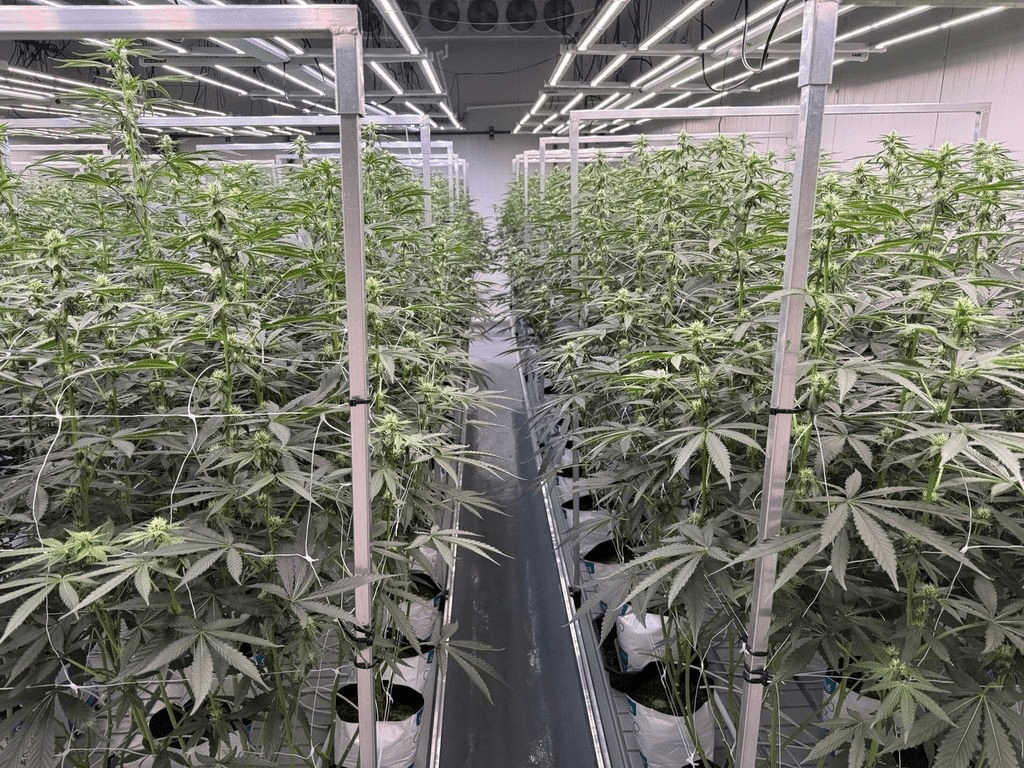
Indoor cannabis cultivation describes the cultivation of plants in closed rooms, equipped with state-of-the-art climate, ventilation and lighting technology. Unlike outdoors, there are no uncontrolled fluctuations here. Instead, the entire grow is controlled by systems that monitor temperature, soil, humidity, fertilizer and nutrient levels.
Professional companies cultivate hemp under strictly controlled conditions - often indoors or in state-of-the-art greenhouse facilities. Cultivation methods such as these meet the requirements of certification guidelines such as GACP (Good Agricultural and Collection Practice) and GMP (Good Manufacturing Practice) and enable precise control of climate, humidity and lighting. The indoor grow offers high control over all parameters and is therefore often used for the cultivation of medicinal cannabis, such as the SCD 25/1 and LBO 24/1 flowers from KHIRON.
Each plant goes through a defined cycle - from germination through the flowering phase to harvest. This produces cannabis of a consistent pharmaceutical standard, free from pesticides, mold or heavy metals.
Cannabis indoor cultivation vs. outdoor cultivation
The difference to outdoor cultivation is enormous: while the weather, pests and seasons influence the yield outdoors, indoor cannabis cultivation delivers consistent quality at all times. Each plant grows in a precisely controlled environment that is geared towards maximum effectiveness and purity.
What do you need for medical indoor growing?
This article provides information about the professional indoor grow of medicinal cannabis. This requires specialized technology, trained personnel and strict quality assurance.
1. production rooms and growbox systems
The basis of professional indoor cannabis cultivation is formed by climate-controlled rooms or modular grow boxes. They are light-proof, sterile and equipped with sensors to control temperature, humidity and CO₂. In modern facilities, plants grow in separate phase rooms - from germination and the flowering phase to drying and packaging.
Many producers work according to GACP guidelines (Good Agricultural and Collection Practice), which ensure hygiene and traceability. GMP (Good Manufacturing Practice) standards also apply to processing steps such as drying or packaging in order to ensure pharmaceutical purity and consistent quality.
Grow boxes are also used on a smaller scale, for example for seed production, research or the development of new hemp genetics. Their reflective interior coating and efficient LED lighting ensure optimum use of light and uniform growth.
2. LED systems and energy efficiency
LED technology plays a key role in modern indoor grow rooms. It offers uniform light distribution with low energy consumption. During the vegetative phase, a cooler, bluish spectrum is used; in the flowering phase, warm, reddish light predominates. Thanks to individually controllable modules, plants in different stages of development can be optimized simultaneously. This results in a precisely coordinated photosynthetic performance.
3. soil, fertilizer and nutrient management
For the cultivation of cannabis plants, either sterile soil or a substrate such as coconut, rock wool or perlite is used. Good aeration is crucial to avoid waterlogging. The fertilizer is precisely dosed - usually automatically via sensor control. Nitrogen-rich nutrients promote the vegetative phase, while the focus in the flowering phase is on phosphorus and potassium. High-quality fertilizer systems (organic or mineral) are specially adapted to medical hemp and promote uniform growth.
4. genetics, seeds and cuttings
Only stable genetics guarantee reproducible results. That is why the seeds used come from certified laboratories. Many farms grow mother plants from which cuttings are obtained - this saves time and ensures genetic uniformity. Every plant is documented: from seed to cultivation to laboratory findings. Traceability is a mandatory part of professional cannabis growing.
5 Automated systems and control
Today, the entire grow is controlled digitally. Sensors measure the pH value, humidity, temperature and nutrient content of the soil. All parameters can be adjusted via central software in order to optimally control the flowering phase or growth. This technology reduces human error and increases yield reliability.
6. safety, hygiene and shipping
The production of medicinal cannabis is subject to strict controls. Access restrictions, disinfection locks and camera surveillance are standard. After harvesting, the flowers are dried, stored and tested. They are then shipped in temperature-controlled containers, often to certified pharmacies or wholesalers. Each product is provided with a batch number, certificate of analysis and proof of origin.
The 4 phases of indoor cannabis growing
- Germination: The seeds germinate in a moist, warm environment within a few days. They are then planted in prepared soil.
- Growth phase: The plant develops vigorously over four to eight weeks. Here, particular attention is paid to the supply of nutrients and air circulation.
- Flowering phase: This phase usually lasts six to twelve weeks. This is when the valuable flowers, which are rich in cannabinoids and terpenes, are produced. LED lighting remains crucial, as it promotes resin production.
- Harvesting and drying: Once the flowering phase is complete, the flowers are dried and cured. The flowers mature under controlled conditions in order to develop their full aroma and medicinal effect.
Advantages of the professional indoor grow
| Advantage | Description |
| Consistent quality | Uniform conditions lead to consistent results. |
| Efficiency | Automated systems save resources and increase yield. |
| Security | Hygienic clean rooms and laboratory controls prevent contamination. |
| Year-round production | Regardless of climate and weather conditions. |
| Sustainability | Modern LED systems reduce energy consumption and CO₂ emissions. |
Conclusion
The professional indoor cultivation of cannabis for medicinal purposes is an established basis for a safe, sustainable and high-quality supply of medicinal hemp. Each plant grows under precise conditions - from the germination of the seeds in sterile soil, through the controlled flowering phase, to the careful harvest. Thanks to state-of-the-art LED technology, optimized fertilizer management and digital control, flowers of consistent quality are produced. The entire grow is documented, traceable and certified according to pharmaceutical guidelines. The indoor grow thus stands for a reliable cultivation method in the cannabis sector: low risk, high control and reliable production of premium medical cannabis that benefits patients worldwide.
Interested in how to get a cannabis prescription? Find out the two ways to get patient status here.