

Depression is one of the most common mental illnesses. Millions of people worldwide are affected, suffering from symptoms such as listlessness, sleep disorders and emotional exhaustion.
For many patients, conventional treatment with antidepressants is helpful, but is often associated with noticeable side effects or is only effective slowly. More and more scientific studies are therefore looking into the question of whether cannabis can help against depression - especially when rapid relief is required.
Medicinal cannabis, which contains both THC and CBD (cannabidiol), is increasingly being researched as a complementary treatment for depression.1
The most important facts in brief2
- Cannabis for depression can alleviate depressive symptoms in the short term.
- THC has been shown to improve mood, while CBD has a calming effect.
- Side effects such as tiredness or slight restlessness rarely occur.
- Medical cannabis has been proven to improve quality of life.
- It does not replace conventional therapy, but can complement it.
How cannabis works against depression
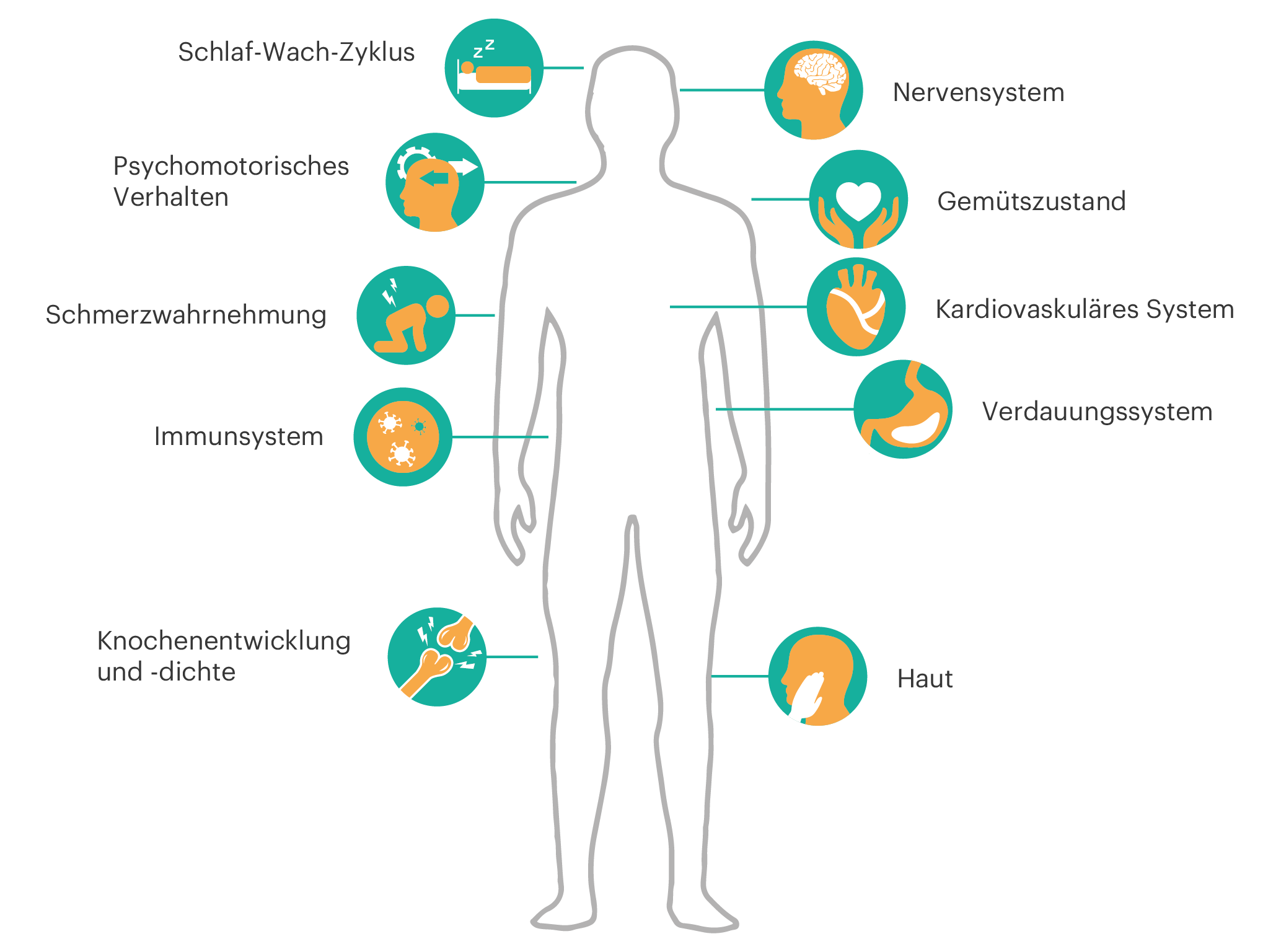
The effect of cannabis on depression is closely linked to the body's endocannabinoid system - a biological network that controls emotions, motivation and well-being. THC (tetrahydrocannabinol) activates receptors in the brain, which leads to a short-term release of dopamine. This can improve mood and reduce stress. CBD (cannabidiol), on the other hand, has an anxiolytic and stabilizing effect without psychoactive effects. It is being investigated in medical research as an important component for the treatment of people with depression and anxiety disorders. This combination makes medical cannabis a potential option when other treatments are too slow to work.3
Current study situation
In a large-scale real-world study by Vigil et al. (2020)4 examined over 1,800 patients who used cannabis for depression.
Results:
- 95% reported an immediate improvement in mood.
- On average, the intensity of the symptoms decreased by 3.76 points on a scale of 0-10.
- THC showed a clear correlation with a stronger effect, CBD had more of a stabilizing effect.
- Side effects were rare (less than 4% of cases).
These results suggest that cannabis can contribute to a noticeable improvement in quality of life in acute depressive phases in the short term.
Quality of life and medical benefits
Many people with depression report that cannabis helps them to feel "functional" again - to be able to sleep, eat or socialize better. Such small successes can be crucial in treatment because they bring back hope and motivation. This short-term improvement in quality of life can also play a therapeutic role from a medical perspective. Medical cannabis is not a cure, but can have a stabilizing effect in combination with antidepressants and psychotherapy.5
There are two ways to become a cannabis patient. Find out more now!
Comparison of relevant studies on cannabis for depression
Several scientific studies have investigated the effect of cannabis on depression - both in clinical and real-life application scenarios. The following overview summarizes key research findings and shows the impact THC, CBD and the medical use of cannabis can have on mood, symptoms and quality of life:
| Study / year | Design / Number of participants | Main results | Significance for treatment |
| Vigil et al, 2020 | Real-world study, n = 1,819 | 95% of patients reported an immediate improvement; THC showed the strongest effect. | Proof of acute effect and short-term improvement in quality of life. |
| Hser et al, 2017 | Secondary analysis, n = 302 | Reduced cannabis use led to less depression, anxiety and better sleep. | Importance of dosage for long-term emotional stability. |
| Satre et al, 2022 | Controlled study, 6 months | Short-term emotional stabilization through structured therapy support with cannabis. | Combination of medical approach and behavioral therapy effective. |
| Spechler et al, 2020 | fMRI study, n = 120 | Activation of the limbic reward system by THC, changes emotional stimulus processing. | Neurological evidence for the mechanism of action of THC in depression. |
| Chen et al, 2025 | Placebo-controlled double-blind study | Expectation effects and psychological factors influence the mood-enhancing effect. | Emphasizes the role of mental factors in cannabis therapy. |
Overall, these studies show that cannabis - especially THC-dominant preparations - can alleviate depressive symptoms and improve quality of life in the short term, while CBD has a primarily regulating and balancing effect. KHIRON offers a wide range of medicinal cannabis flowers and extracts. However, questions about dosage, duration and long-term efficacy remain unanswered and require further medical research.
Opportunities and risks
Cannabis for depression is not a substitute for a complete therapy, but a complementary option.
The advantages include the rapid effect, the subjective improvement in well-being and the low rate of side effects with short-term use.
In the long term, however, there can also be challenges: high doses of THC can cause anxiety or listlessness in sensitive people.6 For this reason, users of medicinal cannabis should always be in close contact with their treating physician and should not experiment with cannabis on their own without therapeutic supervision.
Conclusion
Scientific research shows that cannabis for depression improves the quality of life of many people in the short term. THC in particular can quickly alleviate depressive symptoms, while CBD has a calming, stabilizing effect. Nevertheless, the use of medicinal cannabis remains a complementary measure, not a sole treatment.
Used correctly, however, it can help to alleviate acute phases - and thus enable the decisive step towards more stability, self-efficacy and enjoyment of life.7
FAQ - Cannabis, CBD and depression
Studies show that cannabis can often alleviate depressive symptoms after just a few minutes. Most users report noticeable relief and an improvement in quality of life.
CBD has calming and anxiolytic properties in medical therapy. It is increasingly regarded as a natural supplement to THC.
Side effects such as tiredness, drowsiness or irritability are rare. Medicinal cannabis is considered to be well tolerated when used under controlled conditions.
No. Cannabis alleviates symptoms and improves well-being in the short term, but is not a substitute for complete treatment or therapy.
Before starting cannabis therapy, patients should always seek medical advice to clarify the dosage, strain and possible interactions with antidepressants.
- Vigil JM et al, Yale J Biol Med. 2020;93(2):251-264 ︎
- Vigil JM et al, Yale J Biol Med. 2020;93(2):251-264; Satre DD et al, J Subst Abuse Treat. 2022;137:108699 ︎
- Spechler PA et al, JAMA Psychiatry. 2020;77(10):1033-1042 ︎
- Vigil JM et al, Yale J Biol Med. 2020;93(2):251-264 ︎
- Satre DD et al, J Subst Abuse Treat. 2022;137:108699; Hser YI et al, Addict Behav. 2017;68:18-24 ︎
- Chen X et al, Neuropsychopharmacology. 2025 ︎
- Vigil JM et al, Yale J Biol Med. 2020;93(2):251-264 ︎