

Chronic pain is one of the most common and most stressful health problems. Many sufferers do not respond adequately to conventional medication or suffer from severe side effects. More and more scientific studies are showing that medical cannabis can be an effective and well-tolerated therapy for chronic pain - especially for chronic conditions that are difficult to treat with conventional painkillers.
Effectiveness of medicinal cannabis is proven by studies
Two studies by Moreno-Sanz et al. (2022) - published in Biomedicines and Frontiers in Pain Research - confirm that cannabis significantly relieves pain and improves general well-being. Regardless of whether it is used as an oil or extract or inhaled cannabis flos, the results confirm the high effectiveness of this new option in modern pain therapy.
"Our data show that medicinal cannabis can significantly relieve pain and improve quality of life."1
Cannabis is therefore increasingly considered a serious option in modern medicine, especially for chronic pain syndromes.
What is chronic pain?
Chronic pain occurs when symptoms persist for longer than three months, i.e. well beyond the actual healing phase. It can be permanent or recurring and affects millions of patients worldwide. Unlike acute pain, it no longer has a protective function, but becomes a disease in itself.
Typical chronic pain disorders are
- Back pain, often caused by muscle tension or intervertebral disc problems.
- Joint pain caused by osteoarthritis or rheumatic diseases.
- Neuropathic pain caused by diabetes or after surgery.
- Fibromyalgia with diffuse, persistent pain.
- Pain after cancer treatment or chronic inflammation.
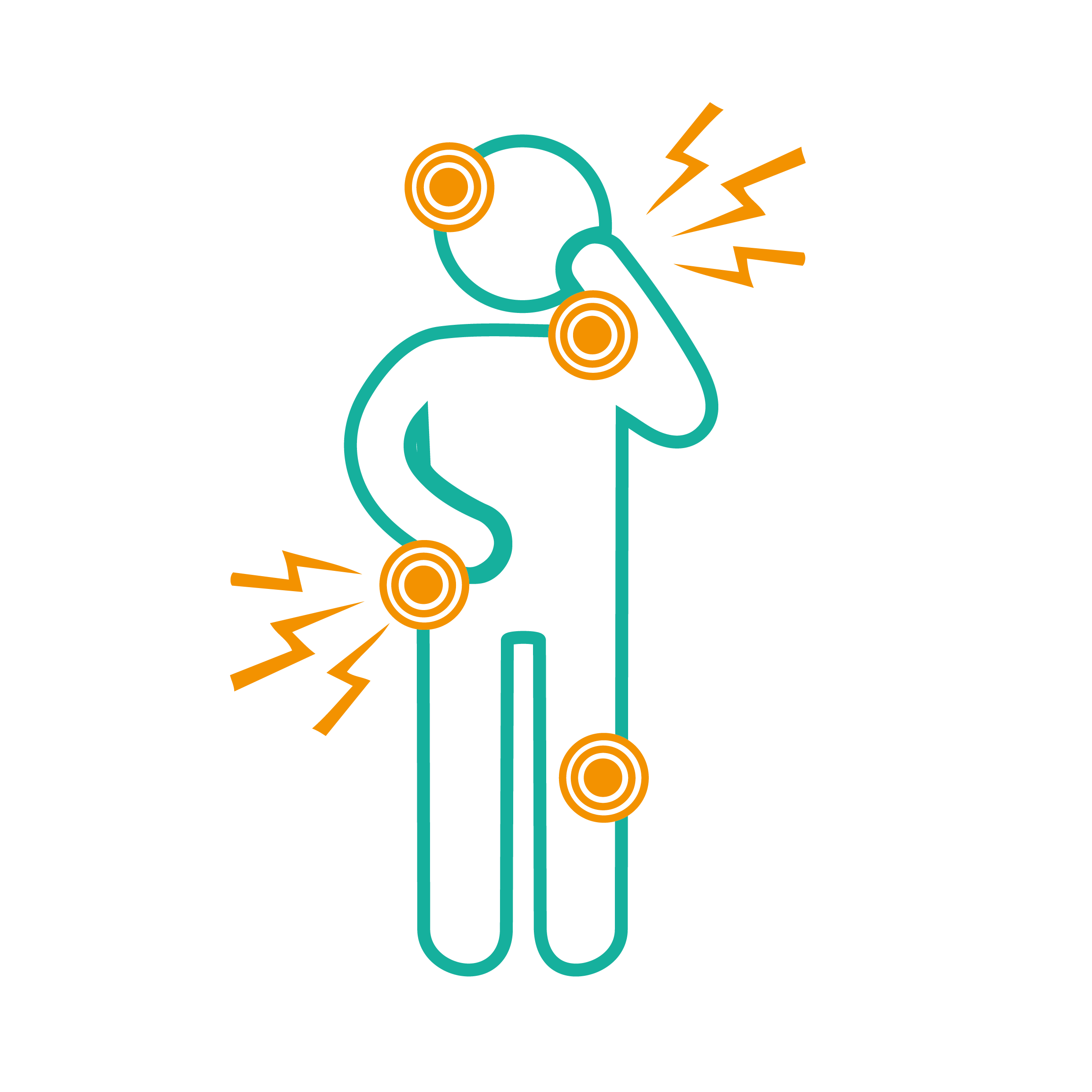
Chronic pain not only has a physical effect, but also a psychological one. It affects sleep, concentration and mood. Many sufferers report exhaustion and depressive symptoms. Successful treatment therefore requires a holistic approach.
Body and psyche are inextricably linked. Read more here about how medicinal cannabis also has a holistic effect in the treatment of depression.
When cannabis is useful as a therapy
Doctors prescribe medicinal cannabis when other painkillers do not help sufficiently or have too many side effects. It is therefore not usually used as a first-line therapy, but as a complementary one.
Cannabis can help when:
- classic painkillers such as opioids or antidepressants do not work,
- chronic pain severely restricts everyday life,
- or the pain is associated with sleep problems or muscle tension.
Medical treatment with cannabis is individualized. Doctors choose the strain, dose and dosage form depending on the type of pain, illness and reaction of the patient. The aim is always to alleviate pain, improve quality of life and at the same time reduce the use of other medications.
How cannabis works for pain
Cannabis exerts its effects via the endogenous cannabinoid system - a network of receptors in the brain, spinal cord and immune system. These receptors regulate pain, mood, inflammation and sleep.
The two main active ingredients are:
- THC (tetrahydrocannabinol): Inhibits pain conduction, relaxes muscles and improves mood.
- CBD (cannabidiol): Has an anti-inflammatory, anxiolytic effect and balances out the psychoactive effects of THC.
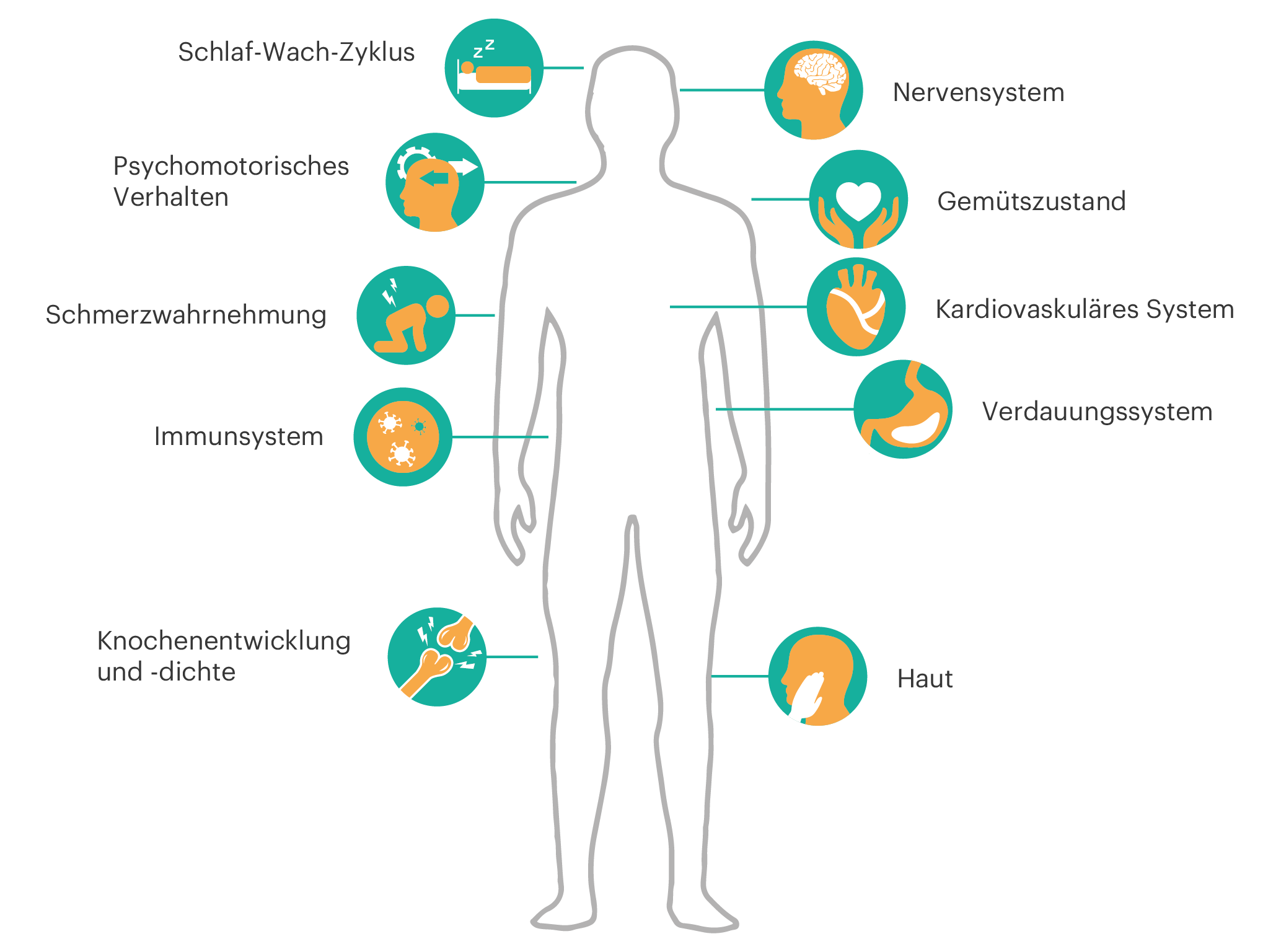
Together, they have a synergistic effect that not only influences the perception of pain, but also the processing of pain. This means that the pain is not only felt less - it also loses its emotional impact. Many patients report that they feel more flexible, calmer and more resilient again.
"Medical cannabis showed a significant reduction in pain scores with high tolerability - a promising approach in modern medicine."2
This result of the study underlines the therapeutic benefits of medicinal cannabis for chronic pain patients.
THC and CBD in comparison
The following overview illustrates the most important differences between THC and CBD in medical use. While THC is often the main active ingredient due to its pharmacological properties, CBD supplements the main active ingredient in order to modulate individual effects. This results in an individually tailored effect depending on the product or flower and therapeutic approach.
| Feature | THC (tetrahydrocannabinol) | CBD (cannabidiol) |
| Effect | Psychoactive, influences perception and relieves acute pain. | Non-psychoactive, anti-inflammatory, anxiolytic. |
| Field of application in medicine | Chronic pain, spasticity and loss of appetite. | Inflammatory diseases, anxiety and sleep disorders. |
| Side effects | Dizziness, fatigue and altered perception. | Very low, usually well tolerated. |
| Scientific study situation | Well investigated, significant pain reduction in several studies. | Increasingly researched, stabilizing effect on THC. |
| Synergy effect | Increases short-term pain relief. | Prolongs the effect of THC and alleviates side effects. |
Medicinal cannabis flowers are generally THC-dominant and also contain a natural, small amount of CBD. This interaction harmonizes the effect and is specifically used by doctors to treat pain symptoms effectively and tolerably.
Manufacturers such as KHIRON also contribute to the fact that doctors today have access to a wide range of standardized quality flowers with an optimally balanced THC/CBD ratio. This allows individual therapy goals to be precisely implemented and patients to be treated in the best possible way and with consistent quality.
Cannabis as part of a multimodal therapy concept
Medical cannabis does not replace other measures, but complements them. Modern pain therapy combines various components:
- Movement,
- Physiotherapy,
- psychological support,
- Relaxation procedures
- and drug treatment if necessary.
In this context, medicinal cannabis can help to better control chronic pain. It reduces intensity, improves sleep and enables many patients to participate more actively in life.
Opioid reduction through cannabis for chronic pain
Several studies also show that the use of medicinal cannabis often reduces the need for opioids - and thus also reduces the risk of severe side effects.
97% of the pain patients surveyed who used cannabis reduced or stopped taking opioids.3
For example, a study by Boehnke et al. (2016) in the Journal of Painreported that patients were able to reduce their opioid consumption by more than 60 percent on average after starting cannabis therapy. This study is one of the most frequently cited on the opioid-sparing effect of cannabis.4 Vigil et al. (2017) found similar results5 and Bradford & Bradford (2017)6 which showed a significant reduction in opioid prescriptions in US states with medical cannabis programs. The study by Moreno-Sanz et al. (2022) in Frontiers in Pain Research also confirms this trend: after the introduction of oral cannabis preparations, the need for concomitant medication - including opioids - fell for many participants.
Conclusion
Research confirms that medicinal cannabis is an effective treatment option for chronic pain. It improves physical and mental well-being, promotes sleep and reduces the intensity of pain - while generally being well tolerated. Used under medical supervision, cannabis is a useful addition to modern medicine and pain therapy - especially for patients who have reached the limits of conventional medication. Cannabis is therefore not a substitute, but a strong partner in the multimodal therapy of chronic pain - scientifically proven, medically recognized and a real gain in quality of life for many sufferers.
FAQ
THC has a psychoactive effect and directly influences perception and pain. CBD has an anti-inflammatory and anxiolytic effect and stabilizes the effects of THC. Both substances complement each other and improve the effectiveness of pain therapy in modern medicine.
More than one study has now shown that cannabis can be effective for chronic pain. The study by Boehnke et al. (2016) already demonstrated a significant reduction in opioid consumption, while Vigil et al. (2017) and Bradford & Bradford (2017) found similar results. The study by Moreno-Sanz et al. (2022) also confirmed that cannabis significantly improves pain, sleep quality and general well-being. These combined research results underline the fact that cannabis is now considered an integral part of modern, evidence-based pain therapy.
Anyone who wants to use cannabis for chronic pain needs a doctor's prescription. Doctors check whether other therapies have been exhausted and whether cannabis makes medical sense. Details on the 2 ways to obtain a prescription can be found here.
- Moreno-Sanz et al, 2022 - Biomedicines / Real-World Evidence of Medical Cannabis Impact on Chronic Pain Patients: A Prospective Observational Study in the UK ︎
- Moreno-Sanz et al, 2022 - Frontiers in Pain Research / Oral Cannabis-Based Medicinal Products Improve Chronic Pain and Health-Related Quality of Life: A Real-World Study in Colombia ︎
- Reiman et al, 2017 - Cannabis and Cannabinoid Research / Cannabis as a Substitute for Opioid-Based Pain Medication: Patient Self-Report ︎
- Boehnke et al, 2016 - Journal of Pain / Medical Cannabis Use Is Associated With Decreased Opiate Medication Use in a Retrospective Cross-Sectional Survey of Patients With Chronic Pain ︎
- 2. Vigil et al, 2017 - Journal of Psychopharmacology / Reduced Prescription Opioid Use Among Patients with Chronic Pain Following Medical Cannabis Use ︎
- Bradford & Bradford, 2017 - Health Affairs / Medical Marijuana Laws Reduce Prescription Medication Use in Medicare Part D ︎