

While medical cannabis was long considered primarily a last-resort treatment option, current data now paint a different picture: Many patients use medical cannabis not only as a complementary treatment but also to reduce their use of traditional prescription medications—in some cases, even replacing them entirely.
This is particularly common among:
- Sleeping pills
- Opioids
- Antidepressants
- Pain relievers
- Sedatives
New healthcare data from Germany, international studies, and patient surveys now provide reliable insights into everyday medical practice.
Major Survey by Bloomwell
The Bloomwell Group’s “Cannabis Barometer Q1 2026” is particularly timely1. The survey polled 3,528 medical cannabis patients in Germany.
Many people with this condition are able to reduce their medication use by switching to cannabis
The results show a clear pattern: Many patients report a significant reduction in their use of other medications after beginning medically supervised cannabis therapy.
According to Bloomwell, the use of prescription medications was reduced by an average of 84.5%.
Summary:
- 75.5% were able to completely stop taking sleeping pills
- 61% were able to stop taking opioids completely
- 67.7% completely stopped taking antidepressants
- 77.3% completely stopped taking methylphenidate medications such as Ritalin
In addition, many participants reported a noticeable improvement in their overall well-being. Dr. Julian Wichmann, a medical specialist and co-founder and CEO of Bloomwell GmbH, explains:
“Medical cannabis should not be a last-resort treatment. In many cases, it seems appropriate to try it as part of an individualized treatment plan at an early stage.”
Especially when it comes to chronic conditions, many patients are now exploring whether cannabis can help reduce their reliance on medication.
Fewer Side Effects from Medical Cannabis
A key finding of the Bloomwell survey concerns the tolerability of the treatment. 60.7% of the patients surveyed reported no longer experiencing any medication-related side effects. Another 37.9% reported significantly fewer side effects.
Many conventional medications can cause significant health problems over the long term—including:
- Fatigue
- Difficulty concentrating
- Gastrointestinal symptoms
- Sedation
- Potential for Dependence
For many patients, this makes medical cannabis a viable alternative in their daily treatment regimen.
German pain specialists see potential in reducing opioid use
German pain specialists are also actively exploring how cannabis-based medications can complement or reduce the need for traditional pain treatments.
During a press event organized by the DGS Pain Initiative on cannabis-based medications, the German Society for Pain Medicine (DGS) stated that reducing opioid use—particularly among patients with chronic pain—could be considered a valid indication for cannabis-based medications2. PD Dr. Michael A. Überall, Vice President of the German Society for Pain Medicine (DGS), emphasized:
"This is a huge relief for the care of critically ill patients suffering from pain, as the elimination of these bureaucratic hurdles has significantly reduced the burden, allowing them to gain access to a potentially effective treatment much more quickly."
The DGS cites several real-world data sets and registry analyses that show that opioid use can be reduced when cannabis-based medications are used.
Of particular interest: According to the DGS, a retrospective analysis of a pain clinic affiliated with the statutory health insurance system showed that opioid use decreased by about 50%, regardless of age, gender, or dosage.
In addition, data from the Schmerz Practice Registry showed that THC/CBD combinations sometimes produced stronger effects than THC-only therapies3. According to the data, existing treatments with highly potent opioids were discontinued entirely even more frequently when patients were treated with THC/CBD combinations. Pain specialist Angelika Hilker summarizes the findings as follows:
"Even low doses of medical cannabis can lead to significant reductions in opioid use."
Cannabis-based medications are thus becoming a greater focus of modern treatment approaches, particularly for chronic pain.
International Study Confirms Trends Among Pain Patients
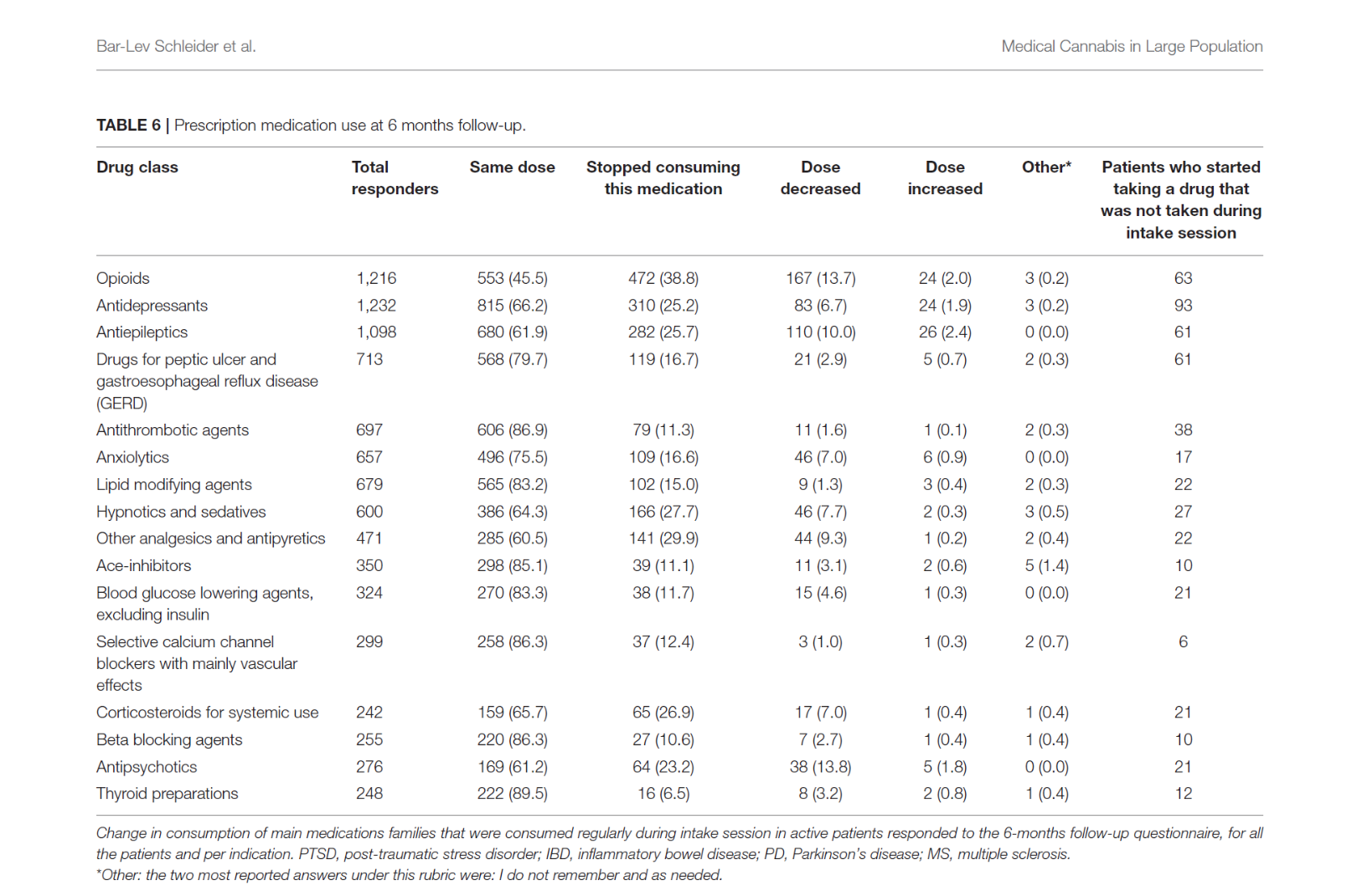
International studies have also shown similar results. A large prospective study from Israel titled “Adherence, Safety, and Effectiveness of Medical Cannabis and Epidemiological Characteristics of the Patient Population: A Prospective Study,” published in 2022 in the journal *Frontiers in Medicine*, examined nearly 10,000 patients receiving medical cannabis therapy4.
The study was conducted by researchers from Ben-Gurion University of the Negev, Soroka University Medical Center, and the renowned cannabis researcher Raphael Mechoulam, among others.
The results:
- 70.6% of patients achieved a clinically significant response
- There were significant reductions in pain
- Reduced use of other medications, particularly opioids, sedatives, and antidepressants
In their conclusion, the researchers write:
"We observed that supervised medical cannabis treatment is associated with high adherence, an improvement in quality of life, and a decrease in pain levels, with a low incidence of serious adverse events."
Translated, this essentially means:
"We observed that medically supervised treatment with medical cannabis is associated with high treatment adherence, an improved quality of life, and a reduction in pain intensity, while at the same time resulting in a low incidence of serious side effects."
Focus on Pain Relief and Quality of Life
The international study also shows that medical cannabis can not only affect medication use but also improve the overall quality of life for many patients.
Before starting therapy, 62% of participants reported very severe pain. After six months, this percentage had dropped to just 5%. In addition, nearly 70% of patients reported a good quality of life after starting therapy—a significant increase compared to the baseline.
These findings are consistent with many anecdotal reports from daily clinical practice. Patients reportten often about:
- Better sleep
- Greater suitability for everyday use
- Less physical strain
- An improved quality of life
Why Real-World Data Is So Important for Medical Cannabis
The body of data on medical cannabis has been growing steadily for years. At the same time, research in this field is often more complex than in traditional drug studies.
The reason:
- Dosages are adjusted on an individual basis
- Different cannabinoid profiles are used
- Patients react differently to THC and CBD
- Many therapies are symptom-based
That is why so-called real-world data is now considered an important component of cannabis research. It shows how medical cannabis is actually used in everyday clinical practice—outside of strictly controlled laboratory conditions.
It is precisely the combination of:
- Patient Surveys
- Clinical experience
- Observational studies
- International Registry Data
shows more and more clearly how medical cannabis is actually used in everyday healthcare.
Medical cannabis is becoming part of daily treatment for many patients
Along with changes in medical data, the market is also changing. In Germany, prices for many cannabis flowers are steadily falling, while at the same time:
As a result, more and more patients are moving away from illegal self-medication toward medically supervised treatment with controlled products from the pharmacy.
For many of those affected, this means:
- Greater Security
- Standardized Quality
- Professional Support
- Personalized Treatment
Conclusion: Reducing medication use through cannabis is becoming a reality for many patients
Current data from Germany and international studies show that many patients can reduce their medication use through cannabis—particularly sleep aids, opioids, and other prescription drugs. At the same time, numerous patients report fewer side effects, a better quality of life, improved sleep, and greater ability to function in daily life. Even within the field of pain medicine in Germany, attitudes toward cannabis-based medications are noticeably changing. More and more doctors are now discussing medical cannabis not just as a last resort, but as a potential component of modern multimodal pain management.
Further research remains important. At the same time, clinical practice already shows that medical cannabis has become an integral part of long-term treatment for many patients.
FAQ on Medical Cannabis and Reducing Medication Use
The available clinical data show, in some cases, significant effects. According to an analysis by the German Society for Pain Medicine, opioid use among pain patients in a practice covered by statutory health insurance decreased by about 50%. The Bloomwell Cannabis Barometer Q1 2026 also showed a significant effect: 61% of the patients surveyed reported being able to completely stop taking opioids, with an average reduction of 83.9%.
The most significant reductions were seen with sleep aids, opioids, and certain pain relievers. In the Bloomwell survey, 75.5% of patients reported that they were able to completely stop taking sleep aids. For non-opioid pain relievers, the average reduction was 79.4%. The Israeli Frontiers study mentioned earlier in the article also observed decreases in the use of opioids, sedatives, antidepressants, and antiepileptic drugs.
Data from the PraxisRegister Schmerz suggest that THC/CBD combinations may be particularly beneficial for certain pain patients, as THC and CBD complement each other’s properties, resulting in a balanced overall profile. According to the DGS, patients on THC/CBD combinations were able to completely discontinue highly potent opioids significantly more often than those on pure THC therapies. This is particularly relevant for patients for whom conventional pain medications are not sufficiently effective or cause excessive side effects.
- Bloomwell Group: Cannabis Barometer Q1 2026. Patient survey of 3,528 medical cannabis patients in Germany, published in 2026. ↩︎
- German Society for Pain Medicine (DGS): Reduced Opioid Use Through Cannabinoids – Practical Tips. Press release from the DGS Pain Initiative on cannabis-based medications, Berlin, December 4, 2024. ↩︎
- Pain Practice Registry: Registry data on opioid reduction with THC/CBD combinations in patients with chronic pain, cited in the DGS Pain Initiative 2024. ↩︎
- Sagy I, Bar-Lev Schleider L, Abu-Shakra M, Novack V. Adherence, Safety, and Effectiveness of Medical Cannabis and Epidemiological Characteristics of the Patient Population: A Prospective Study. Frontiers in Medicine. 2022. ↩︎